Imported from the web
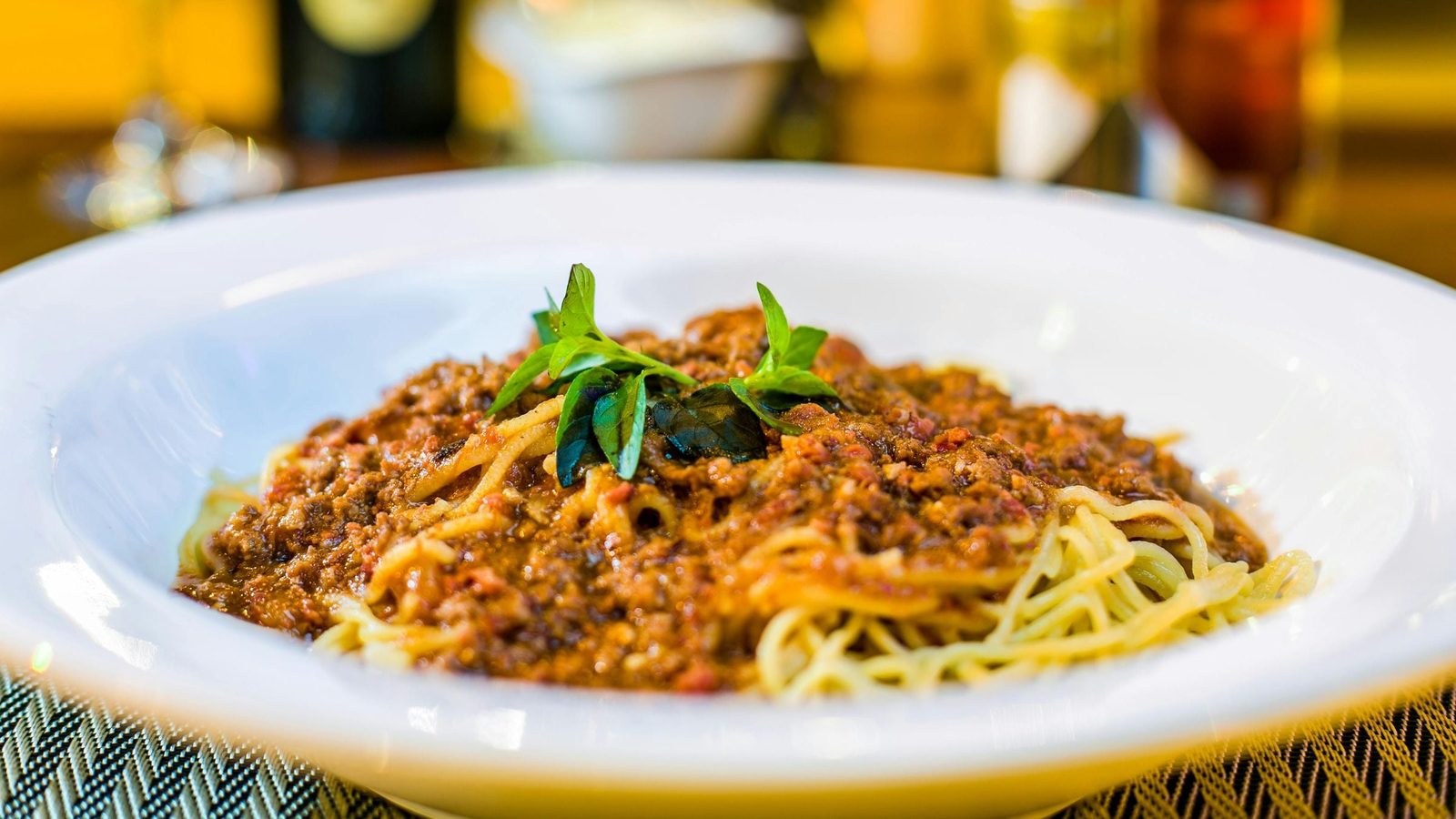
Authentic Ragù alla Bolognese Without Tomatoes
A traditional Bolognese-style meat ragù from Bologna, made without canned or fresh tomatoes. A gently cooked soffritto, browned beef, pancetta, white wine, broth, and milk simmer for several hours into a rich, silky sauce.
Cook this recipe, hands-free
Open it in SeeMeCook for step-by-step Cook Mode, built-in timers, and your whole recipe library — free to start.
Ingredients
- 2 white onions (large, very finely diced)
- 2 stalks celery (medium, very finely diced)
- 2 carrots (medium, very finely diced)
- 100 g pancetta (cut into small cubes; alternatively use bacon or 80 g chicken liver)
- 600 g coarsely ground beef (Wild game mince may be substituted)
- 4 tbsp olive oil
- 2 tbsp tomato paste
- 200 ml dry white wine
- 800 ml strong chicken broth (Use homemade broth or a good-quality prepared broth; add more as needed during simmering)
- 100 ml whole milk (Add after approximately 2 hours of simmering)
- salt (1 teaspoon for the soffritto, plus more to taste)
- freshly ground black pepper (to taste)
- freshly grated nutmeg (1 pinch)
- 1 tbsp butter (Stir in just before serving to round out the sauce)
- pasta water (Use a little of the water from cooking tagliatelle or lasagne sheets)
Steps
- 1
Prepare the soffritto vegetables. Finely dice the onions, celery, and carrots, or pulse them briefly in a food processor until finely chopped without turning them into a purée.
- 2
Heat the olive oil in a large, heavy-bottomed pot over medium heat. Add the diced onions, celery, carrots, and 1 teaspoon of salt.
- 3
Cook the vegetables gently for at least 30 minutes, stirring frequently, until completely soft, sweet-smelling, and lightly glossy. They should soften and develop sweetness rather than brown aggressively.
- 4
Meanwhile, cut the pancetta into small cubes. Place it in a separate skillet without additional fat and cook until crisp and browned. Remove the pancetta from the skillet and set it aside, leaving the rendered fat in the pan.
- 5
Increase the heat under the skillet and brown the ground beef in batches over very high heat. Avoid overcrowding the pan so the meat browns deeply instead of releasing liquid and boiling.
- 6
Add the crisp pancetta and browned beef to the softened soffritto in the heavy pot.
- 7
Add the tomato paste and cook it with the meat and vegetables for several minutes, stirring, until the paste darkens slightly and begins to caramelize.
- 8
Pour in the white wine to deglaze the pot. Scrape up any browned bits from the bottom and let the wine reduce until most of the sharp alcohol aroma has cooked away.
- 9
Gradually add enough chicken broth to nearly cover the ragù. Stir well and bring the mixture briefly to a boil.
- 10
Reduce the heat to the lowest setting. Leave the pot uncovered and let the ragù simmer very gently for 3 to 4 hours, stirring occasionally.
- 11
During the long simmer, add more chicken broth as needed to prevent the sauce from becoming dry. It should gradually become thick, cohesive, and deeply aromatic rather than watery.
- 12
After approximately 2 hours of cooking, pour in the whole milk. Stir it through and continue simmering uncovered until the ragù is rich and silky.
- 13
At the end of cooking, taste and season with additional salt, freshly ground black pepper, and a pinch of freshly grated nutmeg.
- 14
Just before serving, stir in the butter and a little reserved pasta water. Mix until the sauce looks glossy and creamy.
- 15
Serve traditionally with fresh tagliatelle and a little Parmesan, use it in lasagne alla Bolognese with béchamel, or serve it as the meat base for shepherd’s pie with mashed potatoes.
Notes
The defining feature is the long, gentle, uncovered simmer and the absence of canned or fresh tomatoes. Serve with fresh tagliatelle and Parmesan, in lasagne with béchamel, or as a base for shepherd’s pie. Keep the heat very low and add broth during cooking if the ragù begins to dry out.
Nutrition per serving
Every recipe, finally cookable.
Turn your next favorite video into a recipe you can actually follow — ingredients, steps, and times in seconds.
Already have SeeMeCook? Open this recipe →