Imported from the web
Ciabatta — Bake with Jack
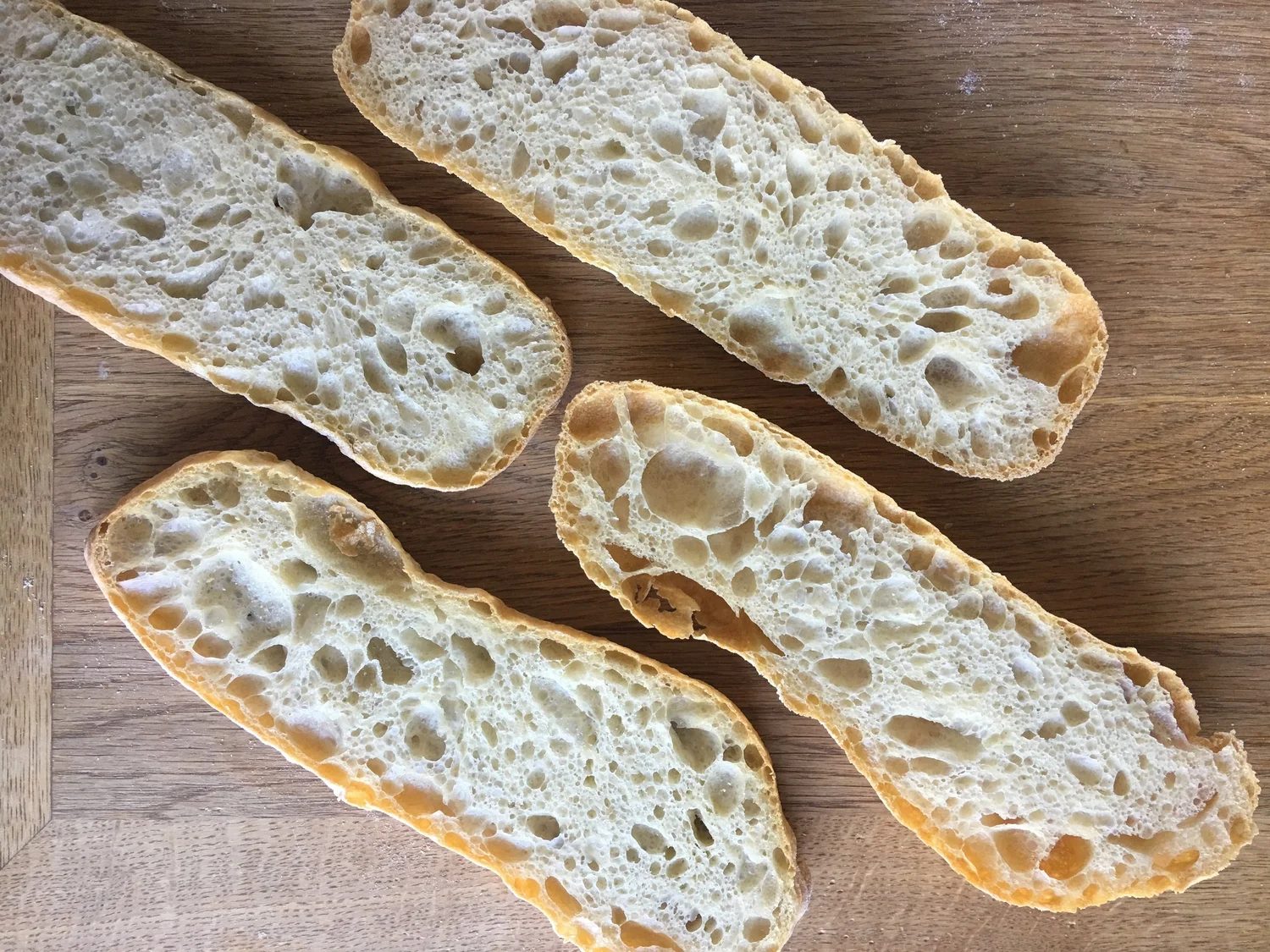
A wet, high-hydration dough that uses a preferment (Biga) to create a characteristic open crumb and deep flavor. This low-maintenance method uses folding in the bowl to build strength without traditional kneading.
Cook this recipe, hands-free
Open it in SeeMeCook for step-by-step Cook Mode, built-in timers, and your whole recipe library — free to start.
Ingredients
- 250 g Strong white bread flour (for the Biga)
- 250 g Water (room temperature, for the Biga)
- 3 g Fresh yeast (for the Biga; or 2g dry easy bake yeast)
- 250 g Strong white bread flour (for the final dough)
- 8 g Salt
- 8 g Fresh yeast (for the final dough; or 4g dry easy bake yeast)
- 125 g Water (room temperature, for the final dough)
- 25 g Olive oil (plus extra for oiling hands and box)
Steps
- 1
In a large mixing bowl, mix together the 250g flour, 250g water, and 3g yeast for the Biga until it becomes a smooth paste. Use a whisk to ensure it is well incorporated.
- 2
Cover the bowl with cling film and rest at room temperature for 6 hours until it is puffy, bubbly, and wobbly.
- 3
Weigh the final dough yeast (8g) and water (125g) into a jug and mix to soften the yeast.
- 4
Place the bowl containing the fermented Biga onto the scales. Weigh in the 250g flour, then weigh the 8g salt on top of the flour. Mix slightly with a scraper to incorporate the salt into the flour.
- 5
Pour the yeast liquid and the 25g olive oil into the bowl and bring everything together into a dough.
- 6
Work the dough inside the bowl with a scraper for 8 minutes. Scoop the dough from the edge closest to you, stretch it up out of the bowl, and drop it down in a circular motion.
- 7
Pour the dough into a well-oiled rectangular plastic box, cover with a lid, and rest for 30 minutes at room temperature.
- 8
Perform the first fold: With oiled hands, slide them under one end of the dough, lift, and fold it over the top. Repeat for the other end, then turn the box 90 degrees and repeat on the remaining two sides (4 folds total). Cover and rest for 30 minutes.
- 9
Repeat the four-sided folding process for a second time, then cover and rest for another 30 minutes.
- 10
Repeat the four-sided folding process for a third time. The dough should feel airy and pillow-like. Rest for a final 30 minutes.
- 11
Line two baking trays with parchment paper.
- 12
Turn the dough out onto a well-floured surface and flour the top sticky side. Gently pull the corners out to form a landscape rectangle, being careful not to deflate the air bubbles.
- 13
Divide the dough vertically into four long pieces using the flat side of a scraper.
- 14
Transfer the loaves to the trays by sliding your hands under each end, stretching them slightly longer as you place them down. Put two loaves on each tray.
- 15
Preheat your oven to 230°C Fan (445°F / Gas Mark 9) while the loaves prove for 30 minutes.
- 16
Bake for 5 minutes (using steam if desired), then turn the oven down to 180°C Fan (355°F / Gas Mark 5) and bake for a further 15-20 minutes.
- 17
Allow the ciabattas to cool completely on a wire rack before slicing.
Notes
The dough is very wet; use oil on your hands during folding and be generous with flour during the dividing stage. The Biga needs 6 hours at room temperature (approx 21°C/70°F). Total active time after Biga is ready is about 4 hours.
Nutrition per serving
Every recipe, finally cookable.
Turn your next favorite video into a recipe you can actually follow — ingredients, steps, and times in seconds.
Already have SeeMeCook? Open this recipe →