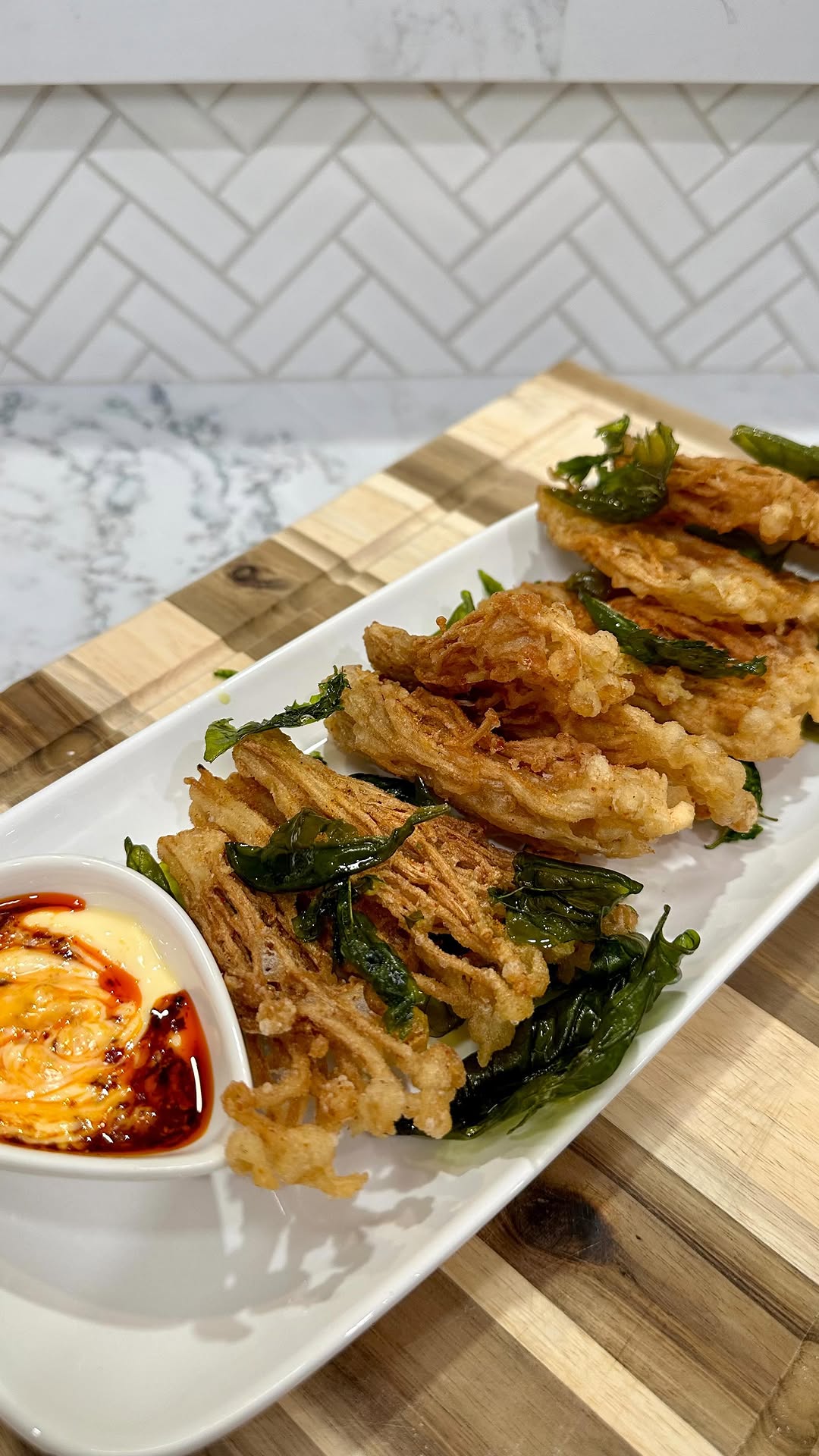
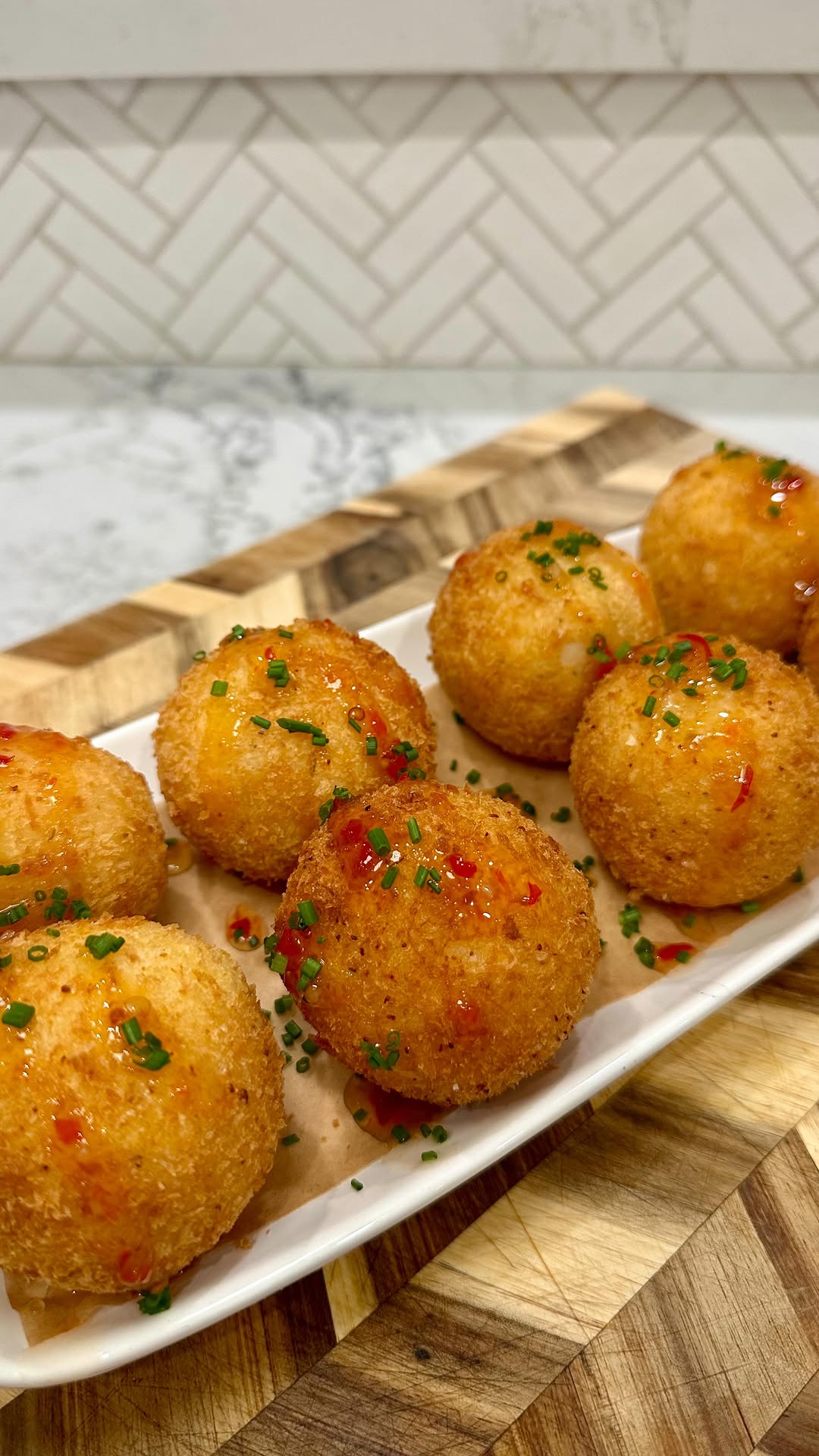
Crab Rangoon-Stuffed Onion Bombs
Translated from Spanish, the language of the reel.
Julia Vuong cooked this in an Instagram reel, in Spanish. SeeMeCook wrote it up from the reel as a full recipe, translated it into English, and added ingredient weights and nutrition.
Watch the original reelImported by Nazareth Simons on SeeMeCook
Tender onion layers form small cups filled with cream cheese, imitation crab, and aromatics. They are coated in flour, a seasoned batter, and Japanese panko, then fried until golden and crispy; serve with sweet chili sauce.
- Time
- 40 minutes
- Equipment
- Stovetop
- Good for
- Snacks
- Cuisine
- East Asian
- Contains
- Gluten, sesame, dairy, eggs, soy, fish, and shellfish
- Diet
- Pescatarian
Diet and allergen details are read from the ingredient names and are not certified.
Ingredients
- 450 g
- 75 g
- 35 g
- 5 g
- 4 g
- 2 g
- 100 g
- 180 g
- 6 g
- 3 g
- 2 g
- 120 g
- 100 g
Weights are estimates. Together, the ingredients weigh about 1.31 kg before cooking, which is about 655 g per serving.
Steps
Peel the onions and trim them as needed, taking care to keep the layers intact. Make a single incision from the outside of each onion toward the center; this will make it easier to separate the layers after blanching.
Bring a pot of water to a boil. Carefully add the onions and blanch them for approximately 1 minute, just until the layers begin to soften.
Remove the onions from the water and transfer them to an ice bath. Let them cool until they are comfortable to handle.
Gently separate the individual onion layers and remove any loose inner membrane or skin. The curved layers will form small cups; set them aside for filling.
In a bowl, combine the cream cheese, imitation crab, scallions, soy sauce, sugar, and sesame oil. Mix until evenly combined.
Transfer the filling to a piping bag or a resealable bag with one corner cut off.
Fill each onion cup with the mixture. Preferably use the smaller onion cups, and do not overfill them to reduce the risk of the filling escaping during frying.
Set up the breading station: place approximately 1/2 cup of flour in a shallow dish. In a second dish, whisk the remaining flour with the eggs, salt, paprika, garlic powder, and 1/2 cup of water. Add more water if needed, until you have a thick but dip-able batter. Place the panko in a third dish.
Lightly coat each filled onion cup in the flour, covering the entire exterior.
Dip each piece into the batter and let the excess drip off.
Completely coat each bomb with Japanese panko, gently pressing the crumbs so they adhere.
Place the breaded bombs on a parchment-lined tray and freeze them for 20 minutes. This firms up the cream cheese filling and helps prevent it from escaping during frying.
Pour enough neutral oil into a heavy-bottomed pot or deep fryer and heat it to approximately 350 °F (180 °C) (175 °C (350 °F)).
Working in small batches, carefully lower the chilled bombs into the hot oil. Fry until the exterior is crisp and golden, approximately 3 to 4 minutes depending on their size, keeping the oil temperature as consistent as possible between batches.
Fry them a second time at a higher temperature to set the crispness, as indicated in the original recipe.
Remove the bombs from the oil and place them on a rack or a paper towel-lined plate to drain excess oil.
Garnish with fresh sliced scallions and serve immediately with plenty of sweet chili sauce for dipping.
Notes
The recipe specifies a second fry at a higher temperature but does not provide the exact temperature or timing for that second fry. The oil should be maintained at approximately 350 °F (175 °C) during the first fry. They are best enjoyed freshly made, when the coating is at its crispiest and the center remains hot and creamy.
Nutrition
These are estimates per serving, worked out from the ingredients.
- Calories
- 1141
- Protein
- 37 g
- Carbs
- 147 g
- Fat
- 48 g
- Fiber
- 8 g
Where the calories come from
Keep this recipe
Save it to your SeeMeCook library, add it to your grocery list, and cook it hands-free with each step read aloud.
Open in SeeMeCook