Imported from YouTube
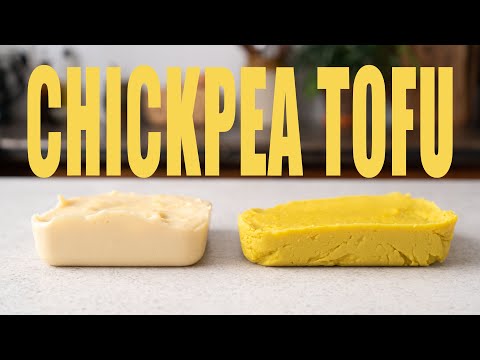
Chickpea Tofu, Two Ways
A Burmese-tofu-inspired preparation made entirely from soaked chickpeas rather than soybeans. Make a refined, strained version with a smooth texture, or a denser zero-waste version flavored with ginger, chili, and turmeric.
Cook this recipe, hands-free
Open it in SeeMeCook for step-by-step Cook Mode, built-in timers, and your whole recipe library — free to start.
Ingredients
- 200 g Dried chickpeas (For the strained version; soak overnight or for at least 8 hours in plenty of water, then drain.)
- Water (Plenty, approximately three times the volume of the chickpeas, for soaking; discard after soaking.)
- 500 ml Water (For blending the strained version.)
- 0.5 tsp Salt (For seasoning the strained chickpea milk.)
- Cooking oil (For frying the tofu, if desired.)
- Salt (Additional salt for frying or serving, to taste.)
- 100 g Dried chickpeas (For the zero-waste version; soak overnight or for at least 8 hours in plenty of water, then drain.)
- Water (Plenty for soaking; discard after soaking.)
- 10 g Fresh ginger (Trimmed; peeling is optional.)
- 1 Fresh chili (Trimmed; use the variety and heat level you prefer. Estimated edible weight: 15 g.)
- 250 ml Water (For blending the zero-waste version.)
- 0.25 tsp Ground turmeric (For the zero-waste version.)
- 0.5 tsp Salt (For the zero-waste version.)
- Cooking oil (For frying the zero-waste tofu, if desired.)
- Salt (Additional salt for frying or serving, to taste.)
Steps
- 1
For the strained version, place 200 g dried chickpeas in a large bowl and cover them with plenty of water—about three times their volume. Soak overnight, or for at least 8 hours, until the chickpeas have expanded substantially.
- 2
Drain the soaked chickpeas through a fine sieve and discard the soaking water.
- 3
Transfer the drained chickpeas to a food processor or blender. Pulse several times to break them down slightly, scraping down the sides as needed. The mixture should remain coarse at this stage.
- 4
Add 500 ml water and blend for several minutes, or until the chickpeas are as smooth as possible. If the food processor cannot break them down effectively, transfer the mixture to a blender.
- 5
Pass the blended chickpea mixture through a fine sieve directly into a saucepan. Press and squeeze the pulp with a spoon to extract as much liquid as possible. Reserve the pulp for soups, stews, or curries, or discard it.
- 6
Before heating, whisk the chickpea liquid thoroughly to loosen the starch that has settled on the bottom. Stir in ½ teaspoon salt.
- 7
Set the saucepan over medium heat and bring the mixture to a gentle boil, whisking continuously so the starch does not stick or burn.
- 8
As soon as the mixture begins to bubble, reduce the heat to a simmer. Continue whisking for about 1 minute, until it thickens into a paste that clings to the whisk and falls back onto itself without immediately leveling out. Cook slightly longer if it is still too loose.
- 9
Pour the hot paste into a 500 ml glass container or mold. Smooth the surface and refrigerate, or leave at room temperature, for about 1 hour until set.
- 10
When set, loosen the tofu from the sides of the mold and turn it out. Slice it with a knife. If it has not set properly, the chickpeas may still be raw; do not eat it, and cook the mixture longer next time.
- 11
For serving, eat the strained tofu immediately, or cut it into cubes and fry in a nonstick pan with a little oil and salt until golden and slightly crisp.
- 12
For the zero-waste version, place 100 g dried chickpeas in a bowl, cover generously with water, and soak overnight or for at least 8 hours. Drain them thoroughly.
- 13
Add the soaked chickpeas, 10 g trimmed ginger, and 1 trimmed chili to a high-speed blender. Pulse briefly to break up the chickpeas.
- 14
Add 250 ml water and blend on high speed for at least 1 minute, until completely smooth.
- 15
Pour the blended mixture into a nonstick frying pan. Add ¼ teaspoon turmeric and ½ teaspoon salt, then stir thoroughly to combine before turning on the heat.
- 16
Cook over medium heat, stirring constantly, until the mixture begins to thicken into a paste.
- 17
Reduce the heat and continue stirring for about 2–3 minutes, until the paste is completely thickened. It should cling to the spatula and contain no liquid.
- 18
Transfer the paste to a 500 ml mold, smooth the top, and let it set for about 1 hour.
- 19
Once firm, loosen the tofu from the mold and slice it. Serve it plain, or cut it into cubes and fry in a nonstick pan with a little oil and salt until golden and crisp.
Notes
The strained version has a more refined texture and is closer to traditional Burmese tofu made from chickpea flour. The zero-waste version retains the chickpea fibers and nutrients and can be flavored with other seasonings. Refrigerate until set and handle gently when unmolding. Do not eat tofu that has failed to set, as the chickpeas may not have been cooked sufficiently.
Nutrition per serving
Every recipe, finally cookable.
Turn your next favorite video into a recipe you can actually follow — ingredients, steps, and times in seconds.
Already have SeeMeCook? Open this recipe →