Imported from the web
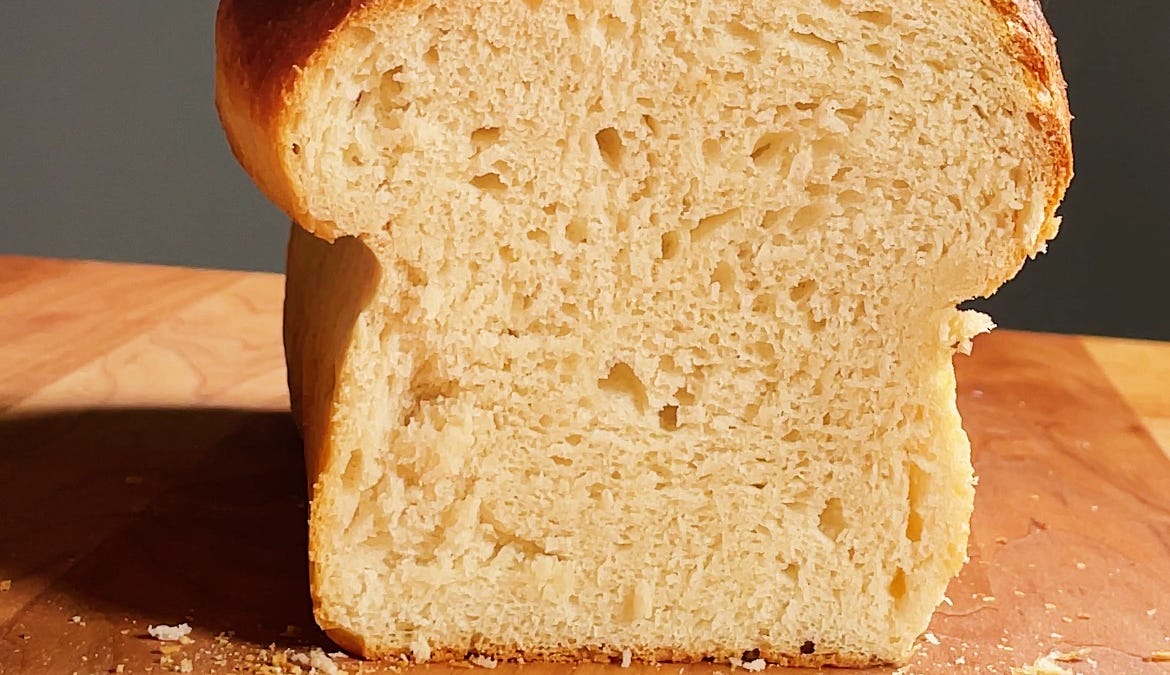
Cottage Cheese Bread
A tender, moist sandwich bread made with blended cottage cheese and egg whites for extra protein. It develops a firm, crusty exterior while staying soft inside and freezes well for later toasting.
Cook this recipe, hands-free
Open it in SeeMeCook for step-by-step Cook Mode, built-in timers, and your whole recipe library — free to start.
Ingredients
- 1.5 tsp Active dry yeast
- 0.333 cup Lukewarm water
- 1 cup Egg whites (About 7 to 8 egg whites)
- 1 cup Cottage cheese
- 4.667 cups Bread flour (Plus more for dusting)
- 1 tbsp Diamond Crystal kosher salt
Steps
- 1
In a large mixing bowl, combine the active dry yeast and lukewarm water. Set the mixture aside for a few minutes to hydrate the yeast.
- 2
Place the egg whites and cottage cheese in a blender or food processor. Blend until completely smooth.
- 3
Add the blended egg-white and cottage-cheese mixture to the hydrated yeast. Whisk until evenly combined.
- 4
Whisk the flour in its container with a dry whisk to remove lumps and aerate it. Measure the flour, then add it and the kosher salt to the wet mixture.
- 5
Using a Dutch whisk or fork, mix until the ingredients come together into a shaggy, sticky dough.
- 6
Dust a work surface with flour and transfer the dough onto it. Knead for 5 to 6 minutes, until the dough begins to look smooth. Alternatively, knead it in a stand mixer until smooth.
- 7
If the dough sticks to your hands, dust your hands with flour or lightly oil them. Use a bench scraper to lift the sticky dough from the work surface as needed while kneading.
- 8
Shape the dough into a ball and return it to the mixing bowl. Cover the bowl and place it in a warm spot to proof for about 1 hour, until the dough is almost doubled in size.
- 9
Line a 10 x 4-inch (26 x 10 cm) loaf pan with parchment paper if needed. Do not use a smaller standard 9 x 5-inch pan, because the dough may ooze over the sides. A larger 10 x 5-inch pan may be used instead; alternatively, divide the dough in half for two smaller loaves or bake it on a baking sheet for a shorter loaf.
- 10
After the first proof, punch down the dough to deflate it. Roll it into a log and pinch the ends together to seal or “stitch” them.
- 11
Place the shaped dough in the prepared loaf pan. Cover and proof for 20 to 25 minutes, until visibly risen and puffy.
- 12
While the dough undergoes its second proof, preheat the oven to 400°F (200°C).
- 13
Once the dough has finished proofing, use a sharp knife or razor blade to make one slit lengthwise down the center of the loaf.
- 14
Bake at 400°F (200°C) for 40 to 45 minutes. The top will brown quickly; as soon as the crust becomes brown and firm, cover the loaf loosely with aluminum foil to prevent it from burning.
- 15
Check for doneness by gently tapping the crust. The loaf is ready when it sounds hollow. Remove it from the oven and cool completely before slicing.
- 16
Serve the cooled bread fresh, or slice it and store the slices in a zip-top bag in the freezer. Toast the slices directly from frozen before serving.
Notes
The bread stays soft and moist for several days at room temperature when stored in a zip-top bag. The author recommends slicing and freezing it, then toasting slices as needed. It also makes excellent French toast. A 10 x 4-inch loaf pan is important for a single tall loaf; use a larger pan or divide the dough if necessary.
Nutrition per serving
Every recipe, finally cookable.
Turn your next favorite video into a recipe you can actually follow — ingredients, steps, and times in seconds.
Already have SeeMeCook? Open this recipe →