Imported from the web
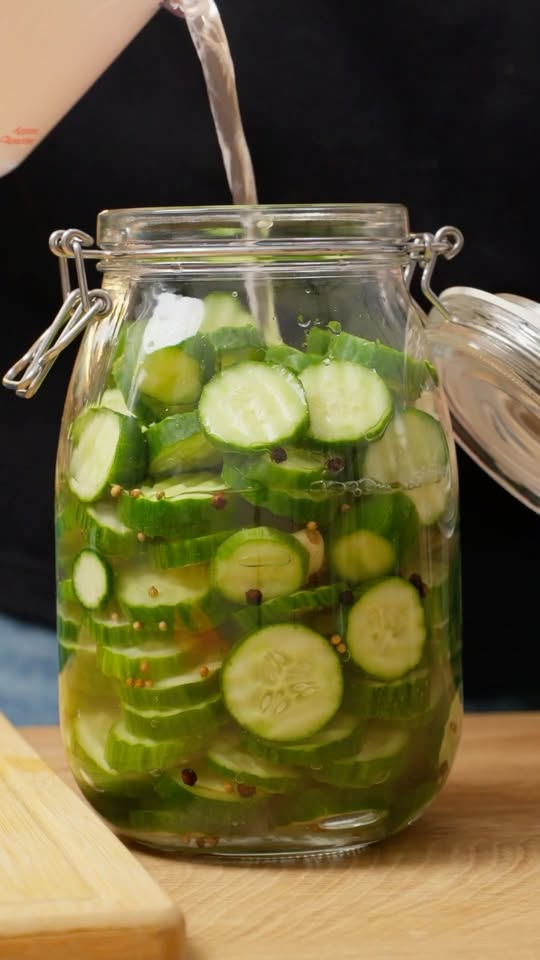
Naturally Fermented Pickled Cucumbers, Carrots, and Peppers
Homemade pickles fermented with only a water-and-salt brine, preserving the vegetables’ crunch while naturally producing probiotics. The cucumbers are flavored with dill, garlic, coriander seeds, and black peppercorns, while the carrots and peppers are left with simpler flavors.
Cook this recipe, hands-free
Open it in SeeMeCook for step-by-step Cook Mode, built-in timers, and your whole recipe library — free to start.
Ingredients
- 1 كجم Fresh cucumbers (Wash well and leave dry; the quantity is approximate because the source did not specify a weight)
- 500 جم Fresh carrots (Wash well and cut as desired; the quantity is approximate)
- 300 جم Small slender fresh peppers (Wash well and leave whole if small and slender; the quantity is approximate)
- Fresh dill (A small amount per jar; do not use too much because its flavor is strong)
- 5 فصوص Garlic (Per jar of cucumbers, or according to the jar size)
- 2 ملعقة صغيرة Coriander seeds (Per jar of cucumbers)
- 2 ملعقة صغيرة Black peppercorns (Per jar of cucumbers)
- 1 لتر Water (Filtered or mineral water; it may be boiled and then left to cool. Use a small amount warm to dissolve the salt, then top up to 1 L with room-temperature water)
- 25 جم Non-iodized salt (Per 1 L of water; rock salt may be used. For the peppers, the salt can be increased slightly. This is approximately 4–5 tsp of fine salt, but weighing is more accurate)
Steps
- 1
Wash the cucumbers, carrots, and peppers thoroughly, then dry them completely. The vegetables should be fresh and firm, because fermentation softens them, and starting with soft vegetables will result in very soft pickles.
- 2
Cut the cucumbers and carrots with a knife to the desired size. If the peppers are small and slender, leave them whole, as in the source method.
- 3
Use glass jars and wash them thoroughly along with the lids. Pour boiling water over them to sterilize the inside, then sterilize any small lids that will be used to hold the vegetables down in the same way.
- 4
Distribute the cucumbers among the sterilized jars. Add a small amount of dill to each jar, followed by five garlic cloves and 2 tsp each of coriander seeds and black peppercorns. Do not use too much dill, as its flavor becomes very strong during pickling.
- 5
Place the carrots in separate jars. Do not add dill, according to the original method.
- 6
Place the peppers in their jars. The original method uses only water and salt for the peppers, but you may add other flavorings if desired.
- 7
To prepare the brine, place a small amount of warm water in a bowl, then add 25–30 g of non-iodized salt per 1 L of water and stir until completely dissolved. Do not use iodized salt; use a non-iodized salt such as rock salt.
- 8
Top up the water to a full 1 L using filtered or mineral water at room temperature. Do not use entirely hot boiled water, as high heat may kill the beneficial bacteria needed for fermentation; if you boiled the water, let it cool before using.
- 9
Pour the brine into the cucumber jars until the vegetables are completely covered. Repeat with the carrots and peppers, increasing the salt slightly for the peppers if desired.
- 10
Make sure all the vegetables remain submerged below the surface of the brine throughout the pickling period. Place a sterilized small lid or a suitable weight over the vegetables to push them down, then seal the jar.
- 11
Leave the jars at room temperature for 24 hours without opening them. The next day, open them and check for signs that fermentation has started and taste the pickles, then continue monitoring according to the desired acidity and crunch.
Notes
This is the beginning of the pickling process during the first 24 hours, not a specified final maturation time. Keep the vegetables completely submerged under the brine, and use very clean utensils and jars. If a clearly unpleasant odor or mold appears, discard the contents. The quantity of vegetables and number of jars were not specified in the source, so the quantities have been estimated.
Nutrition per serving
Every recipe, finally cookable.
Turn your next favorite video into a recipe you can actually follow — ingredients, steps, and times in seconds.
Already have SeeMeCook? Open this recipe →