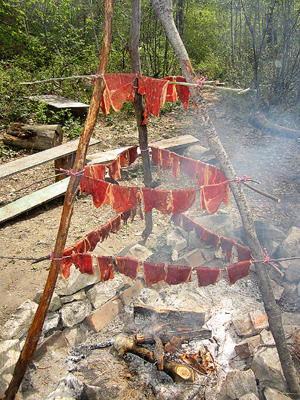
Traditional and Modern Pemmican Recipes
This recipe first appeared on Alderleaf Wilderness College. SeeMeCook added ingredient weights and nutrition.
Read the original recipeImported by Logolept on SeeMeCook
A collection of four pemmican recipes ranging from traditional meat and fat mixtures to a modern vegetarian-friendly version. This high-energy, shelf-stable survival food is designed for long-term storage and portability.
- Time
- 9 hours
- Equipment
- Stovetop, oven, and blender
- Good for
- Lunch, dinner, or snacks
- Contains
- Peanuts and tree nuts
Diet and allergen details are read from the ingredient names and are not certified.
Ingredients
Recipe #1 (Standard)
- 500 g
- 480 g
- 410 g
- 100 g
- 40 g
Recipe #2 (Raisin Beef)
- 240 g
- 200 g
Recipe #3 (Traditional)
- 450 g
- 200 g
Recipe #4 (Sweet/Vegetarian)
- 350 g
- 300 g
- 320 g
- 150 g
- 250 g
Weights are estimates. Together, the ingredients weigh about 3.69 kg before cooking, which is about 310 g per serving.
Steps
Prepare the meat by ensuring it is as lean as possible. If you do not have a meat grinder, have your butcher double ground it.
Spread the ground meat very thin on a cookie sheet and dry in the oven at 180°F (82 °C) (82°C (180 °F)) for at least 8 hours, or until it is sinewy and crispy.
Pound the dried meat into a nearly powder consistency using a blender or similar tool.
Grind the dried fruit, leaving it slightly lumpy if a textured consistency is desired.
Heat the rendered fat (suet or tallow) on the stove at medium heat until it is completely liquid. For better shelf life, strain out any solids, let it cool, then re-melt and strain a second time.
In a large bowl, combine the dried meat powder and ground fruit. Add any optional nuts or honey.
Pour the warm liquid fat into the meat and fruit mixture. Use just enough fat to hold the ingredients together; using warm fat allows for better mixing with less volume.
Mix everything thoroughly by hand.
Press the mixture into a pan or tin until about 3/4 inch thick. Alternatively, divide and shape into bars approximately 4 inches long by 1 inch wide.
Let the pemmican cool completely. If using a pan, refrigerate until firm before cutting into bars.
Wrap bars individually in wax paper or paper bags. Store in a cool, dry place; properly prepared pemmican can last for several years.
Notes
When rendering suet, be careful not to burn it or let it smoke. In warmer climates or during summer, use less fat to maintain stability; in winter or cold climates, use more fat for energy. For the vegetarian version (Recipe #4), honey is used as the binder, but can be replaced with suet in cold climates.
Nutrition
These are estimates per serving, worked out from the ingredients.
- Calories
- 1503
- Protein
- 77 g
- Carbs
- 122 g
- Fat
- 83 g
- Fiber
- 11 g
Where the calories come from
Keep this recipe
Save it to your SeeMeCook library, add it to your grocery list, and cook it hands-free with each step read aloud.
Open in SeeMeCook